Tropical Dry Forests: The Exceptional Stand-Out
At first glance, some might think that “tropical” and “dry” contradict each other, but nothing is farther from the truth. The variety of Costa Rica’s ecosystems includes some notable stand-outs like the tropical dry forest. The long-established and strong dry seasons in the Guanacaste and Nicoya Peninsula areas have produced an astonishingly interesting ecosystem. Here, things develop very differently from the rest of the country.
Tropical dry forests receive less than 79 inches of rainfall per year. From late December to mid-May, the unrelenting dry season governs the northern lowland forests. Two periods of intense rain follow between May and July and then between September and October. During these times, the forest transforms.
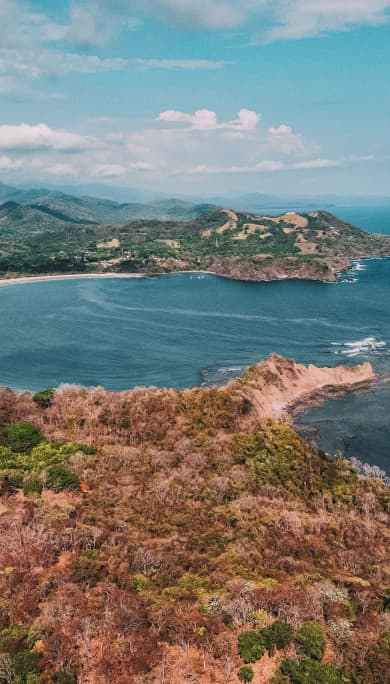
In the dry season, the tropical dry forest looks wilted, with most trees losing their leaves and most vegetation turning brown. Then, in the rainy months, it bursts with an explosion of green! The hills and fields become so lush they can reach similar levels to tropical rainforests.
Are Dry Forests Dead During the Dry Season?

Not everything is as it seems. A big misunderstanding of tropical dry forests is that they “die” during their driest period. However, the flora and fauna of this ecosystem are perfectly adapted to these conditions. The species are environmentally tough, resistant to heat, and depend less on complex inter-species interactions than in the rainforest. This way they are perfectly adapted to the scarcer months. Nothing dies during the dry season: it simply adjusts.
There is a visible difference in wildlife numbers as the forest mutates from one state to the other, but this is natural. Many wildlife species move to other areas with more food depending on the seasonal conditions. If they aren’t around when you visit, they’ll be back later for sure.
And what many think is the trees withering is simply an important stage of their year. During this period, most trees lose their leaves to concentrate all their energy into blossoming flowers. This creates awe-inspiring yellow, pink, and white spectacles worthy of a photograph. An example is the iconic “cortés amarillo” (Handroanthus ochraceus). It comes alight with vibrant yellow flowers during this time. What many think is the trees withering is in fact the trees at their most alive!
Unique Traits of Tropical Dry Forests

Dry forests are multilayered, meaning the ecosystem has species that live and grow from the ground to the tree canopy. Unperturbed tropical dry forests are between 65 feet to almost 100 feet tall. The trees tend to have stout trunks and flat-topped crowns, as if extending to the sides. It’s common that the trees, unlike those in the rainforest, are not in direct contact with each other. Because they are less tightly packed, other plants and animals have more space to move and grow.
Something that is also unique to this ecosystem is decomposition. In rainforests, the humidity and evergreen leaves mean a never-ending cycle of decomposition on the ground. Dry forests don’t have that luxury. In a healthy tropical dry forest, organic materials like leaves and branches fall down during the dry season and accumulate there. When the rainy season arrives, the humidity, insects, and other waste-consuming creatures break it down almost to the point where nothing can be seen on the soil. Now there is a fresh batch of nutrients for the dry forest to consume until the next rainy season!
Human Impact on Costa Rica’s Dry Forests

The tropical dry forest is perhaps the most endangered of the major inland ecosystems in Costa Rica. It is not as widespread as, for example, rainforests, so it’s at more risk. It’s the same all across Central America, where you can find it in relatively small patches from Panama to Mexico. Hundreds of years ago, tropical dry forests covered around 17% of the planet’s surface. Now, it is believed that it’s less than 2%. It’s a fragile ecosystem, easy to disrupt.
In Costa Rica, tropical dry forests were exploited for logging, especially when coal production was one of the country’s main economic activities. They were also cut down for pasturing and the extraction of precious woods. These practices are now regulated, and the logging of wild woods is illegal. However, tropical dry forests have been diminished to a fraction of what they used to be. Because of these extreme conditions, any damage can have a great impact. Nowadays, some of the biggest threats include wild fires and subsistence-level micro-ranching.
Climate change is one of the most impactful dangers to tropical dry forests. This area of Costa Rica has turned drier and warmer in recent decades, blurring the seasons. One of the biggest consequences is that these forests can no longer decompose ground foliage properly. This results in less-rich soils and less nutritional support during the dry season.
It affects wildlife too, particularly the presence of insects. In other ecosystems, animals dropping fruit or seeds results in more plants. Tropical dry forests depend more on wind-spread pollination and small animal pollinators such as beetles. Pollinator densities vary more now with climate change, which means fewer chances for trees and other plants to reproduce. Larger animals, unable to find food, move elsewhere, affecting further the balance of the forest.
Conservation Efforts for Tropical Dry Forests
Luckily, improvements have been made to protect dry forests! However, there is still a lot of work to be done to ensure their restoration. The largest and most important tropical dry forests of Costa Rica have been declared national parks or nature reserves. In addition, various groups have been championing for these fascinating ecosystems, such as the Guanacaste Dry Forest Conservation Fund. More sustainable agricultural practices, education, and eco-conscious tourismwill continue to benefit tropical dry forests.
Enjoying the tropical dry forest can be a good way to contribute to its continued protection. Show interest in these areas of Costa Rica, visit the national parks, and share their unique beauty and ecological importance. With a reputable tour guide and good practices, more poeple will have a chance to see the forest for all it can offer.
Dry Forests: An Explorer’s Natural Heaven

Appearances are deceiving, and tropical dry forests are as full of biodiversity as any ecosystem. The most iconic trees you can find in this forest include “corteza amarilla” (Tabebuia chrysantha), “indio desnudo” (Bursera simaruba), sabana oaks (Tabebuia rosea), and Costa Rica’s national tree, known as the Guanacaste tree (Enterolobium cyclocarpum). Other species include shrubs, vines, lianas, and abundant mushrooms of different types.
Wildlife is also extremely varied. Costa Rica’s national animal, the white-tailed deer, is one of the most iconic sights of these forests. There are also howler monkeys, tapirs, peccaries, porcupines, coatimundi, tortoises, and coyotes. Though very difficult to spot, even pumas and ocelots move across tropical dry forests. Not to mention the dozens of amphibian and reptile species that sneak among the leaves.
Tropical dry forests also have a great variety of birdlife. This includes rare species like the spot- breasted oriole (Icterus pectoralis). There are other prized birds such as the short-tailed hawk (Buteo brachyurus), crested guan (Penelope purpurascens), the long-tailed manakin (Chiroxiphia linearis), and the great curassow (Crax rubra).
The best spots to explore tropical dry forests are Santa Rosa National Park, Guanacaste National Park, and Palo Verde National Park. Other areas of the Nicoya Peninsula are also good. If you’re a nature lover, hiking and birdwatching tours will bring you joy. These are the best ways to get close to the unique and beautiful landscape of the tropical dry forest.